
Table of Contents
ToggleImagine walking down the street and seeing a giant T-Rex casually munching on a hot dog. Sounds like a scene straight out of a sci-fi movie, right? Welcome to the world of augmented reality without apps, where the boundaries between the digital and physical blur without the need for a smartphone.
Overview of Augmented Reality Without App
Augmented reality without an app offers innovative experiences by merging the physical and digital worlds seamlessly. This technology employs web-based platforms that utilize browser capabilities, eliminating the need for traditional installations. Users engage with interactive content directly through their mobile browsers or smart glasses.
Numerous applications exist in various sectors. Retailers can showcase products in real-world settings, allowing customers to visualize how items fit into their lives. Educational institutions benefit from immersive learning experiences, where students can explore complex concepts through interactive 3D models.
Business presentations gain a competitive edge when integrating augmented reality. Presenters can illustrate ideas in real-time, enhancing audience engagement. Visitors to museums can interact with exhibits, deepening their understanding of historical artifacts through supplementary digital content.
Moreover, experiences like virtual tours provide geographical flexibility. Potential travelers can explore destinations through engaging narratives, gaining familiarity before visiting. Events and festivals can implement augmented reality to enrich attendee experiences, highlighting key attractions via digital overlays.
Efficiency stands out as a major benefit. Users access augmented reality experiences quickly without the barriers of lengthy downloads. This accessibility broadens participation, ensuring that more individuals can enjoy the advantages of this groundbreaking technology.
As augmented reality continues evolving, its integration without dedicated apps will likely expand. The future promises even more diverse applications, potentially transforming industries and everyday interactions.
Benefits of Augmented Reality Without App
Augmented reality without an app enhances the way individuals interact with digital content in the physical world. This technology provides unique advantages that improve user engagement and accessibility.
Enhanced User Experience
Immersive experiences become a hallmark of augmented reality without apps. Users explore interactive elements directly through browsers or smart glasses, creating a seamless integration of digital visuals and real-world environments. Engaging with 3D models fosters deeper connections with content, making learning and shopping more enjoyable. Businesses, too, gain from enriched presentations that captivate audiences. Real-time visualization captures attention and facilitates better understanding, bringing presentations to life.
Accessibility for Users
Augmented reality without apps expands accessibility for a diverse audience. Quick access through web-based platforms eliminates the need for downloads or installations. Users from various backgrounds can engage with content using mobile devices without specific requirements. This ease of access attracts a wider audience, enhancing participation in experiences like virtual tours or educational demonstrations. Ultimately, augmented reality without apps democratizes technology, enabling more people to benefit from these innovative solutions.
Key Technologies Behind Augmented Reality Without App
Innovative technologies drive augmented reality without apps, enhancing user experiences through seamless access and interaction. This section outlines key components that make web-based AR possible.
Web-Based AR Platforms
Web-based AR platforms deliver immersive experiences directly through mobile browsers. These platforms leverage web technologies like WebGL and WebXR to render 3D content without requiring downloads. Users simply scan a QR code or visit a URL to engage with interactive features. This method streamlines access, allowing quick participation in examples like virtual product try-ons in retail or informative displays in museums. Flexibility and convenience characterize these platforms, broadening their appeal across various industries.
QR Codes and Image Recognition
QR codes serve as gateways to augmented reality experiences without the need for apps. They enable users to quickly access digital content by scanning with a smartphone camera. Image recognition technology complements QR codes, allowing recognition of physical objects, artworks, and signs. This approach often triggers AR overlays, enriching real-world interactions with additional information or visuals. Such technologies promote dynamic learning environments and engaging marketing strategies, enhancing connection between digital and physical contexts.
Real-World Applications of Augmented Reality Without App
Augmented reality without apps transforms various industries by enhancing user engagement directly through web-based platforms. This technology provides immediate access to interactive experiences, creating rich interactions in the physical world.
Retail and E-Commerce
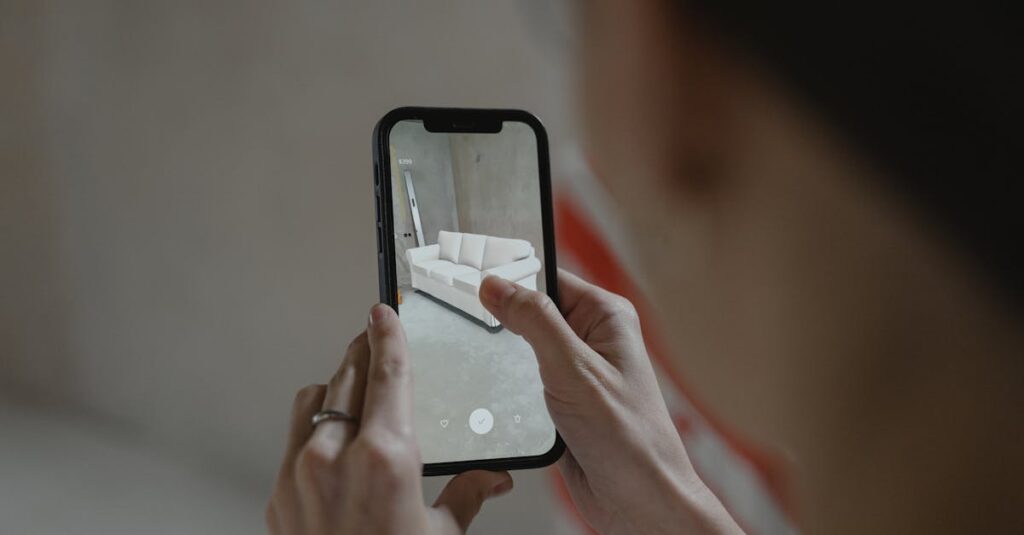
In retail, augmented reality allows customers to visualize products in their actual environment. Shoppers can try on clothing, view furniture in their homes, or see how accessories complement their outfits. This visualization increases confidence in purchase decisions, reducing returns. Brands utilize web-based AR to create seamless shopping experiences. Therefore, consumers enjoy instant engagement without needing to download an app, promoting a more efficient purchasing process.
Education and Training
Educational institutions leverage augmented reality to immerse students in interactive learning environments. With this technology, learners explore complex subjects through 3D models and visual aids. Classrooms become dynamic spaces, enhancing understanding of difficult concepts. Furthermore, training programs use AR for hands-on experiences, enabling trainees to practice skills in lifelike scenarios. Engagement increases when information becomes accessible directly through mobile browsers, making learning more effective and enjoyable.
Challenges and Limitations
Augmented reality without apps presents specific challenges and limitations that impact its widespread implementation and effectiveness.
Technical Constraints
Web-based AR relies on robust internet connections. Slow speeds can hinder performance and limit overall user experience. Device compatibility issues also arise when using various web browsers and operating systems. Not all devices support advanced AR technologies like WebGL and WebXR, leading to inconsistent accessibility. Furthermore, real-time tracking capabilities vary significantly across devices, resulting in a disjointed experience. Developers face the challenge of ensuring smooth interactions while optimizing content for numerous platforms. Limited processing power on some devices restricts the complexity of AR experiences, impacting engagement potential.
User Adoption Issues
Despite its innovative nature, user adoption remains an issue. Many individuals lack familiarity with web-based AR technologies, resulting in hesitation to engage. Trust is a critical factor; users often prefer established apps due to concerns over security and performance. Additionally, the requirement for users to navigate to URLs or scan QR codes introduces friction in the experience. Some users may resist changing habits or exploring unfamiliar technology. Educating potential users is necessary to promote confidence in adopting web-based AR solutions, yet it presents an ongoing challenge for developers and marketers.
Augmented reality without apps is reshaping how individuals interact with their environments. By seamlessly blending digital visuals with the physical world it enhances experiences across various sectors. Users can engage with content quickly and easily through web-based platforms without the hassle of downloads.
This technology not only democratizes access but also fosters deeper connections with products and information. As it continues to evolve businesses and educators can leverage these immersive experiences to captivate audiences and streamline processes.
While challenges remain in terms of user adoption and technical limitations addressing these issues will pave the way for broader acceptance. The future of augmented reality without apps holds immense potential to transform everyday interactions and redefine how people engage with the world around them.


