
Table of Contents
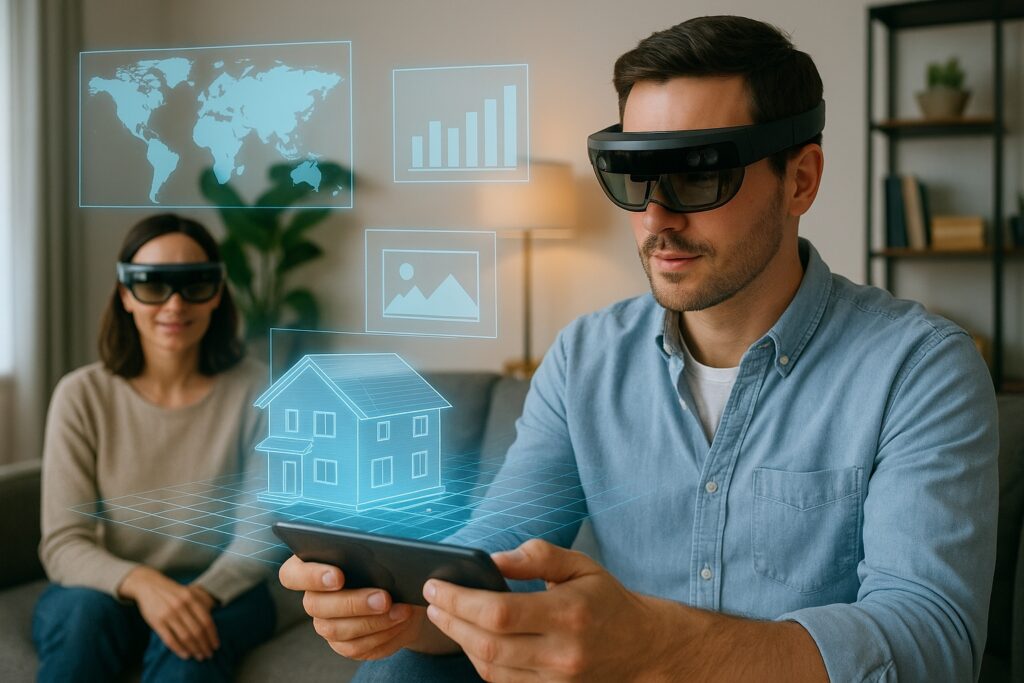
ToggleImagine a world where your browser doesn’t just show you websites but brings them to life right in front of your eyes. Enter the augmented reality browser—a game-changer that turns mundane online searches into immersive experiences. Gone are the days of staring at flat screens and scrolling endlessly. With AR browsers, users can interact with digital content as if it were part of their physical surroundings.
Overview of Augmented Reality Browser
Augmented reality browsers enhance user interaction with digital content by embedding it into the real world. Users experience a fusion of virtual and physical elements, creating an engaging search environment. Various applications exist, including navigation, education, and gaming.
Accessing AR browsers typically requires a compatible device equipped with a camera and location services. These technologies allow the browser to accurately overlay digital information onto the physical world. The integration of geo-location data amplifies the relevance of information retrieved, offering personalized experiences.
Prominent AR browsers include Google Lens and Microsoft’s HoloLens. Such tools empower users to scan objects and receive real-time data. Retail sectors benefit significantly from AR technology by enabling virtual try-ons and interactive product placements.
Recent studies show that AR applications increase consumer engagement by up to 70%. This heightened engagement translates into improved conversion rates, demonstrating the efficacy of AR tools in marketing. Users also report higher satisfaction due to the immersive nature of AR experiences.
Developers continuously innovate, creating new features to enhance usability and functionality. Future advancements may focus on improving spatial awareness and reducing latency in AR interactions. Continuous improvements aim to provide seamless integration with everyday tasks, enriching user experiences further.
Incorporating AR browsers into routine tasks offers potential benefits across various industries. By combining utility with entertainment, these browsers redefine how individuals access and interact with information in their environment.
Key Features of Augmented Reality Browsers
Augmented reality browsers offer various features that enhance user experiences and interactions. These features empower users to engage with digital information in innovative ways.
Interactive User Interfaces
Interactive user interfaces stand out in augmented reality browsers. Users benefit from intuitive designs that promote engagement. Gesture controls allow individuals to manipulate virtual objects effortlessly. Voice commands enhance accessibility, providing another layer of interaction. Visual cues guide users, facilitating seamless navigation through the digital overlays. These features combine to create a dynamic environment that responds to user input effectively.
Integration with Real-World Environments
Integration with real-world environments defines the impact of augmented reality browsers. These browsers overlay digital information directly onto physical spaces, creating a cohesive experience. Real-time data displays enrich user interactions, allowing them to access contextual information instantly. Users can view directions or product details while observing their surroundings. This feature enhances navigation and shopping experiences dramatically. Mobile devices equipped with cameras play a crucial role, enabling accurate mapping and location services.
Benefits of Using Augmented Reality Browsers
Augmented reality browsers provide significant advantages across various fields. Their ability to merge digital information with the real world enhances user engagement and interaction.
Enhanced User Experience
Augmented reality browsers significantly elevate user experience by offering immersive interactions. Users benefit from viewing digital content overlaying their physical environment, creating an engaging way to access information. Interactive interfaces, including gesture controls and voice commands, streamline navigation and provide intuitive engagement. Statistics show that AR applications increase consumer engagement by up to 70%, resulting in higher satisfaction levels. Retailers leverage these features for virtual try-ons, allowing customers to visualize products before purchase. Ultimately, AR browsers transform mundane tasks into enjoyable experiences, encouraging deeper exploration of digital content.
Improved Learning and Education
Augmented reality browsers enhance learning through visually enriching experiences. Students interact with realistic 3D models, making complex concepts easier to understand. Interactive educational tools foster engagement and retention, leading to improved learning outcomes. AR enables instant access to real-time data and contextually relevant information, enhancing classroom experiences. For example, anatomy students can visualize human organs in 3D, facilitating deeper comprehension. By integrating AR into educational curricula, institutions prepare learners for technology-driven future landscapes. Enhanced engagement through AR promotes a deeper understanding of subjects while keeping learners motivated and curious.
Popular Augmented Reality Browsers
Augmented reality browsers play a crucial role in enhancing user experiences by integrating digital information into the real world. Two popular options include Google Lens and Microsoft HoloLens, each offering unique features and functionalities.
Browser A
Google Lens serves as a powerful AR browser, utilizing advanced image recognition technology. Users can scan objects or text and receive real-time information and suggestions. This capability allows individuals to identify landmarks, translate text, and shop for products simply by capturing images. With its integration into Android devices, Google Lens provides widespread accessibility. Statistics show that about 50% of users report increased engagement while using Google Lens for shopping, underscoring its effectiveness in retail environments.
Browser B
Microsoft HoloLens offers a distinct approach to augmented reality browsing through its mixed reality capabilities. Users experience an immersive environment by interacting with holographic content, which overlays digital information on the physical world. Enterprises benefit significantly from HoloLens by enhancing training programs and visualizing complex data. In various sectors, including architecture and healthcare, HoloLens improves collaboration and decision-making. Recent data indicates that companies adopting HoloLens experience productivity boosts of up to 30%, highlighting its potential in professional applications.
Challenges and Limitations
Augmented reality browsers face several challenges that impact their widespread adoption. Data privacy concerns present significant obstacles, as users often worry about how their personal information gets collected and used. With AR applications requiring access to cameras and location services, potential users may hesitate to share sensitive data.
User experience poses another limitation. While many devices support AR, varying hardware capabilities can lead to inconsistent performance. Some users may encounter lag or visual distortion, which diminishes the immersive experience inherent to AR applications. Technical issues create frustration, hindering user engagement.
Development costs also factor into the challenges faced by this technology. Creating and maintaining high-quality AR content demands substantial investment in resources and expertise. Smaller companies might struggle to allocate budgets, limiting their ability to compete with larger firms that invest heavily in AR technology.
Limited battery life of mobile devices can restrict the duration users interact with AR applications. Users often experience decreased functionality as device power wanes. Hence, maintaining user interest in longer sessions remains a challenge for developers.
Accessibility concerns arise with less tech-savvy populations. Many users may not fully understand navigation or how to use such applications. Educational efforts and intuitive designs are essential to ensure broader adoption and enhance user confidence.
Compatibility across various devices represents another obstacle. Different operating systems and hardware specifications create inconsistencies in performance. Ensuring a seamless experience across platforms is crucial for maximizing user reach.
Finally, content saturation can hinder user engagement. As more AR applications and experiences emerge, standing out in a crowded market becomes increasingly difficult. Compelling, unique content is essential to capture users’ attention and maintain interest over time.
Augmented reality browsers are set to revolutionize the way users interact with digital content. By merging the virtual and physical worlds they create engaging experiences that enhance everyday tasks. As technology continues to evolve AR browsers will likely become more intuitive and accessible.
The potential applications across various sectors highlight their versatility and ability to improve user engagement. While challenges like data privacy and hardware limitations remain developers are actively working to overcome these hurdles. The future of AR browsers looks promising as they pave the way for a more immersive and interactive digital landscape.


