
Table of Contents
ToggleImagine wandering through a bustling city and having a friendly digital guide right at your fingertips. Augmented reality navigation is turning this dream into reality, blending the physical world with digital enhancements to make exploring easier and a lot more fun. Gone are the days of squinting at paper maps or fumbling with clunky GPS devices.
Overview of Augmented Reality Navigation
Augmented reality navigation transforms how individuals explore cities by overlaying digital information onto the physical world. This technology provides real-time instructions, points of interest, and contextual data, seamlessly blending the virtual with the real. Users experience enhanced situational awareness, leading to increased safety and convenience while navigating unfamiliar environments.
Smart devices like smartphones and AR glasses facilitate augmented reality navigation. They utilize GPS, sensors, and camera functionality to create an interactive experience. Users can receive directional prompts through visual cues displayed on their device screens or wearables, guiding them effectively in their surroundings.
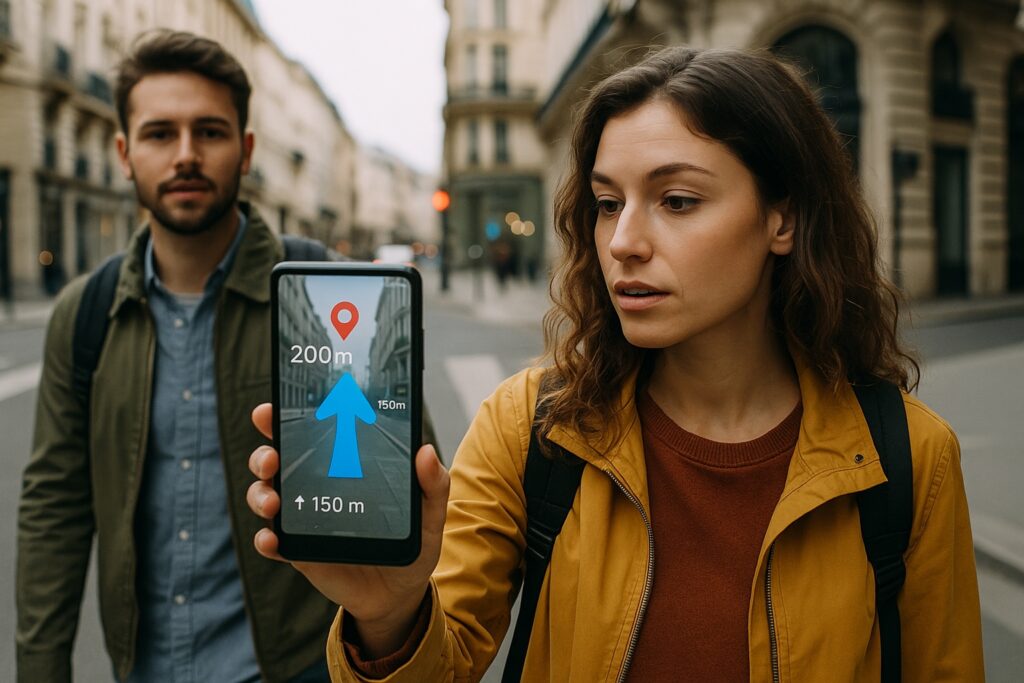
Numerous applications leverage augmented reality for navigation purposes. Popular AR navigation apps, such as Google Maps Live View, allow users to see arrows and directions overlaid onto their live camera feed. This integration simplifies the navigation process, reducing the likelihood of getting lost.
User feedback emphasizes the intuitive nature of augmented reality navigation. Many individuals report feeling more engaged and confident when using AR applications compared to traditional maps or GPS devices. The gamification aspect of these apps often increases users’ interest in exploring their surroundings.
To illustrate, statistics show that over 50% of users prefer AR navigation solutions because of their user-friendly interfaces and visual appeal. Additionally, studies indicate that augmented reality can improve navigation accuracy by up to 40%. This significant enhancement demonstrates how merging digital information with reality benefits users while exploring new areas.
Key Features of Augmented Reality Navigation
Augmented reality navigation offers several cutting-edge features that enhance user experience and facilitate seamless exploration. Two significant aspects include real-time data integration and user interface considerations.
Real-Time Data Integration
Real-time data integration allows users to receive instant information based on their surroundings. Navigation apps utilize GPS and sensory inputs to display live updates, ensuring precision in guidance. This feature enables users to access information about nearby attractions, traffic conditions, and transit options. Up-to-the-minute updates enhance the navigation experience, helping individuals make informed decisions while exploring. By leveraging data streams from local services, augmented reality navigation creates an interactive journey tailored to user preferences and real-time circumstances.
User Interface Considerations
User interface plays a crucial role in augmented reality navigation. An intuitive interface simplifies interaction, allowing users to focus on their environment rather than complex controls. Overlaying directional prompts and information in a visually appealing manner enhances engagement. Clear visuals and uncomplicated layouts are key for effective navigation, as they contribute to user comfort and speed of understanding. User-centered design principles ensure that people can access essential navigation features without confusion, making the experience effortless and enjoyable.
Applications of Augmented Reality Navigation
Augmented reality navigation finds applications across various sectors, significantly enhancing user experiences and functionality.
Transportation
Transportation systems benefit greatly from augmented reality navigation. Real-time updates on traffic conditions and route changes help users avoid congestion. Drivers can access hazards and police alerts displayed on their screens, promoting safer travels. Additionally, AR navigation streamlines public transit use by clearly indicating bus and train arrivals at nearby stops. With an interactive interface, commuters gain quick access to transit options tailored to their routes. Such improvements increase efficiency, allowing travelers to make informed decisions swiftly.
Tourism and Travel
Tourism leverages augmented reality navigation to enrich travel experiences. Tourists explore cities with interactive information directly overlaying the sights. Historical facts and nearby attractions appear in real time, guiding visitors through unfamiliar areas effortlessly. Users report increased engagement while discovering hidden gems, as digital content automatically customizes based on their location. AR navigation also enhances walking tours, providing audio and visual cues to create immersive adventures. With over 50% of tourists expressing preference for AR tools, it’s clear this technology elevates travel experiences significantly.
Benefits of Augmented Reality Navigation
Augmented reality navigation offers several advantages that enhance user experiences. First, it increases situational awareness by overlaying essential information onto a user’s environment. This feature provides real-time guidance, making navigation safer and more intuitive.
Users often find augmented reality navigation more engaging and easier to use than traditional methods. Studies show that over 50% of individuals prefer AR solutions for their visual appeal. Engaging interfaces help users focus on their surroundings rather than struggling with complicated maps or GPS devices.
Effectiveness also improves significantly with augmented reality navigation. Research indicates navigation accuracy can increase by up to 40% when using AR technology. This increase allows individuals to explore new areas with confidence, reducing the chance of getting lost.
Convenience is another core benefit. Instant updates about nearby attractions, traffic conditions, and public transit options streamline the exploration process. Users benefit from clear visuals that simplify decision-making in unfamiliar settings.
Tourists gain unique experiences through augmented reality applications. Interactions with historical sights or local attractions become richer with digital information. More than half of tourists prefer AR tools to enhance their travel experience, highlighting the positive impact of this technology on tourism.
In transportation, AR navigation supports safer journeys with real-time alerts for hazards and traffic changes. Passengers can expect timely notifications about bus and train arrivals at nearby stops, reinforcing public transit usability. Enhanced comfort and understanding stem from straightforward designs that prioritize necessary navigation features.
Overall, augmented reality navigation significantly improves the decision-making process and enjoyment of exploring new environments.
Challenges and Limitations
Augmented reality navigation faces several challenges that impact its widespread adoption. One significant issue involves environmental factors. Poor lighting or obstructive objects can hinder the effectiveness of AR applications, making it difficult for users to receive accurate navigation information.
User experience also presents challenges. Not all users are familiar with advanced technology, potentially leading to usability concerns. Some individuals may find the transition from traditional navigation methods to AR unfamiliar and intimidating.
Technical limitations play a crucial role in AR navigation challenges. GPS accuracy can vary significantly based on location, with urban environments often introducing complications due to signal interference. Users in areas with tall buildings or dense foliage might encounter navigation inaccuracies.
Compatibility with devices also poses a limitation. Not every smartphone or AR device supports advanced AR features, restricting accessibility for some users. Additionally, reliance on internet connectivity can limit functionality in remote areas where service is unavailable.
Safety concerns arise when using augmented reality navigation. Users engrossed in their AR displays might overlook real-world hazards. Situational awareness becomes critical, as distractions can lead to accidents while navigating busy streets or unfamiliar locations.
Lastly, privacy issues warrant attention. AR navigation apps often collect user data to provide personalized experiences, raising concerns about data security and privacy. Users may hesitate to engage with technology that seems to compromise their personal information.
Despite the advancements in augmented reality navigation, various challenges persist that hinder its full potential. Addressing these limitations will be essential for improving user experience and expanding its applicability in everyday navigation.
Future Trends in Augmented Reality Navigation
Emerging trends indicate significant advancements in augmented reality (AR) navigation, particularly in the areas of artificial intelligence (AI) integration and enhanced user interfaces. AI algorithms enable personalized routing based on user preferences and historical behavior, drastically improving navigation experiences.
In addition, developments in wearable technology, including smart glasses, offer hands-free navigation solutions. Smart glasses display AR elements seamlessly, allowing users to interact with their environments without distractions. Recent innovations also emphasize the role of 5G connectivity, which facilitates faster data exchange and enhances real-time updates for users.
Augmented reality navigation tools now incorporate machine learning, enabling systems to learn from individual user interactions and adapt over time. This adaptability enhances the overall user experience by providing customized information and recommendations. Implementation of crowd-sourced data further enriches navigation options by allowing users to share their experiences and insights.
Real-world environments see further enhancements through improved spatial mapping technologies. These advancements help AR applications recognize specific landmarks and obstacles more accurately, contributing to safer navigation. Adoption of AR technologies in urban planning also shows promise, providing citizens with more interactive maps that reflect changing city layouts.
Traveling experiences continue to transform as AR navigation extends beyond just directions. Virtual guides might emerge, overlaying historical and cultural context onto landmarks, allowing users to deeply engage with their surroundings. Tourists increasingly prefer these enriched explorations, as indicated by over 50% expressing satisfaction with AR tools.
Lastly, security and privacy measures must evolve alongside these technology trends. Developers prioritize user data protection while ensuring a seamless navigation experience. Focus on creating safe and engaging environments will drive the future of augmented reality navigation, making it more appealing for everyday use.
Augmented reality navigation represents a significant leap forward in how individuals explore their surroundings. By merging digital information with the physical world, it offers a more intuitive and engaging experience. Users benefit from real-time updates and enhanced situational awareness, making navigation safer and more enjoyable.
As technology continues to evolve, the integration of AI and improved user interfaces will likely enhance this experience even further. Addressing current challenges will be essential for widespread adoption. The future of augmented reality navigation holds great promise for transforming exploration and travel, ensuring users can navigate confidently and discover new places with ease.


