

In today’s fast-paced digital landscape, businesses are constantly seeking innovative ways to enhance productivity and streamline operations. Augmented reality (AR) is emerging as a game-changer, transforming traditional workflows into dynamic, interactive experiences. By overlaying digital information onto the real world, AR empowers teams to visualize complex tasks and collaborate more effectively.
As industries from manufacturing to healthcare adopt AR technology, understanding its workflow implications becomes essential. This article delves into the intricacies of augmented reality workflows, exploring how they can optimize processes, reduce errors, and elevate overall efficiency. With the right AR tools, organizations can not only improve their day-to-day operations but also gain a competitive edge in their respective markets.
Understanding Augmented Reality Workflow
Augmented reality (AR) enhances traditional workflows by integrating digital elements with the physical environment. This integration fosters improved collaboration and efficiencies, fundamentally altering how tasks are completed.
Definition of Augmented Reality
Augmented reality refers to technology that overlays digital content onto the real world, merging virtual elements with physical surroundings. This combination creates an interactive environment where users can visualize data and information in real time. Industries utilize AR for training, design visualization, remote assistance, and maintenance, enhancing user experiences and decision-making.
Key Components of the Workflow
The augmented reality workflow consists of several key components that facilitate effective integration and execution:
- Content Creation: Designers produce 3D models and digital assets tailored for AR applications. These assets include images, animations, and interactive elements relevant to tasks.
- User Interface Design: Developing intuitive interfaces ensures users can interact seamlessly with AR content. Interfaces must simplify navigation and enhance usability for smooth workflows.
- Development Tools: Software development kits (SDKs) andAR platforms provide developers with tools to create and deploy AR applications. Popular platforms include Unity, Vuforia, and ARKit, which offer extensive libraries for rapid development.
- Data Integration: Integrating real-time data from various sources into the AR environment allows users to access pertinent information quickly. This integration can include sensor data, databases, and cloud services.
- Deployment Mechanisms: Implementing AR applications across devices such as smartphones, tablets, and smart glasses ensures accessibility. Users should experience consistent performance across multiple platforms.
- User Feedback: Collecting user feedback during and after AR interactions informs improvements. Addressing user concerns and suggestions enhances future AR deployments and workflow efficiencies.
- Continuous Improvement: An iterative process allows organizations to refine their AR workflows regularly. Adapting to technological advancements and user needs ensures the AR experience evolves effectively.
These components work together to create a cohesive and efficient augmented reality workflow, promoting enhanced productivity and operational effectiveness across varied industries.
Applications of Augmented Reality Workflow
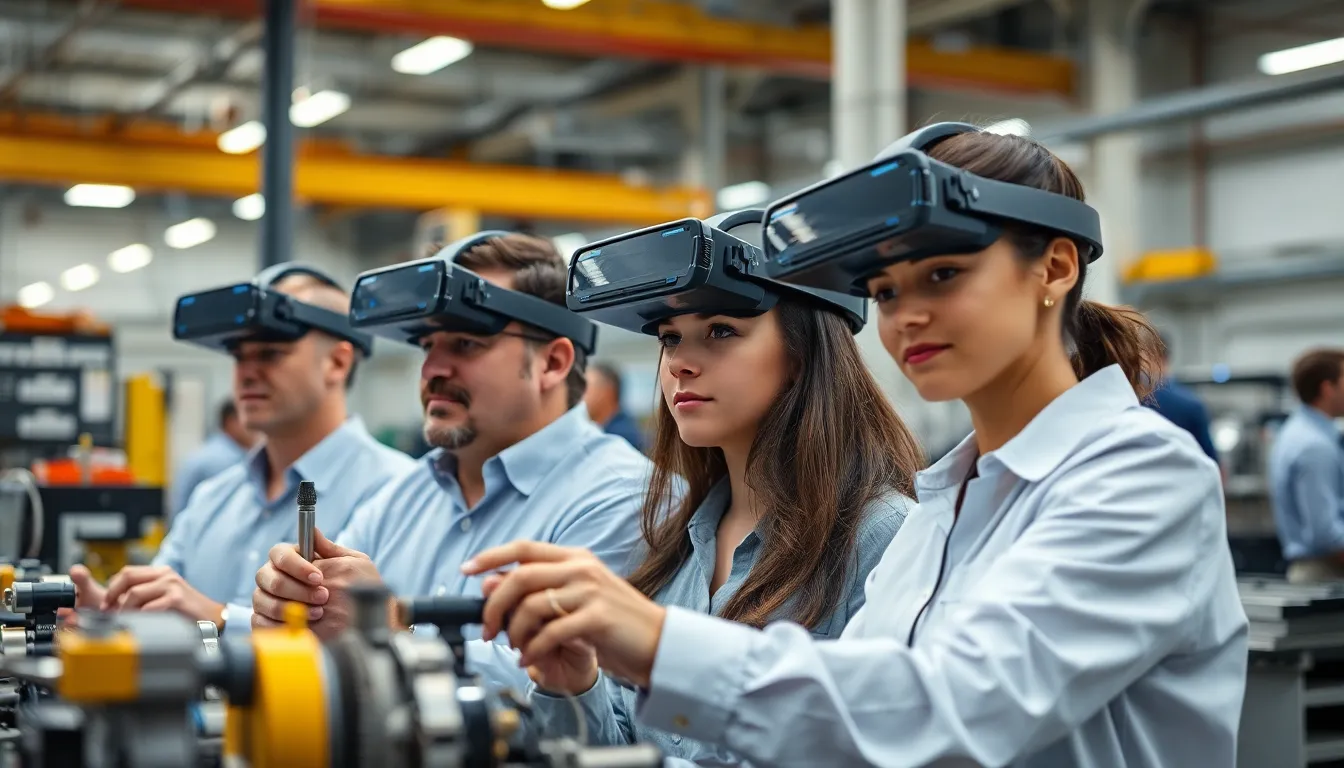
Augmented reality (AR) workflows find applications across multiple industries, enhancing productivity and transforming traditional processes. The benefits of implementing AR workflows further amplify their significance, offering organizations a competitive edge.
Industries Utilizing Augmented Reality
- Manufacturing: AR assists in assembly line processes, allowing workers to visualize instructions and monitor performance metrics. This leads to reduced training time and minimized errors.
- Healthcare: AR enhances surgical procedures by overlaying vital information on a surgeon’s field of view, improving precision during operations and facilitating better decision-making.
- Retail: AR enables customers to virtually try on products or visualize items in their space, enhancing the shopping experience and increasing engagement.
- Education: AR provides interactive learning experiences, allowing students to engage with complex subjects and concepts through immersive simulations and visualizations.
- Construction: AR aids architects and construction teams in visualizing project outcomes, streamlining collaboration, and enhancing accuracy in on-site planning.
Benefits of Implementing Augmented Reality Workflow
- Improved Efficiency: AR streamlines procedures, reducing the time employees spend on tasks by providing real-time guidance and support.
- Enhanced Collaboration: Teams can share digital information in real time, fostering better communication and quicker problem-solving.
- Error Reduction: AR decreases mistakes by displaying precise instructions and necessary data, allowing for more accurate outputs.
- Cost Savings: Organizations save on training costs and reduce delays in project completion, resulting in lower operational expenses.
- Increased Engagement: AR captures user attention and encourages active participation, enhancing learning and retention for training purposes.
Challenges in Augmented Reality Workflow
Augmented reality (AR) workflows face several challenges that can hinder their effective implementation. These challenges include technical limitations, user adoption issues, and the need for seamless integration into existing systems.
Technical Limitations
Technical limitations significantly impact AR workflow efficiency. Hardware requirements often demand high-performance devices capable of running AR applications smoothly. Compatibility issues can arise between different devices and AR software, leading to inconsistent user experiences. Additionally, bandwidth restrictions may affect the quality of real-time data streaming, compromising the effectiveness of AR applications in environments with poor connectivity. Latency issues can result in delayed responses to user interactions, reducing the immersive experience. The complexity of creating high-quality 3D content adds another layer of difficulty, requiring skilled personnel and resources.
User Adoption Issues
User adoption issues pose another major challenge for AR workflows. Resistance to new technology can stem from a lack of familiarity or fear of change. Employees may require extensive training to effectively utilize AR features, leading to increased costs and time investments. Confidence in AR applications often fluctuates due to inconsistent user experiences across various platforms. Moreover, perceptions of AR as a gimmick rather than a valuable tool can impede its acceptance in organizations. A clear demonstration of AR’s benefits and relevance to specific tasks is critical to fostering user engagement and promoting widespread adoption.
Future of Augmented Reality Workflow
The future of augmented reality (AR) workflow holds significant promise as technology continues to evolve. AR is expected to transform industries, creating more interactive and efficient ways to complete tasks.
Emerging Trends
- Artificial Intelligence Integration: AI enhances AR capabilities, allowing systems to understand and predict user actions, tailoring experiences to individual needs.
- 5G Connectivity: With faster data transfers, 5G enables more robust AR applications, eliminating latency and enhancing real-time performance.
- Cross-Platform Compatibility: AR tools are becoming more versatile, functioning across different devices such as smartphones, tablets, and wearable technologies.
- Collaborative AR Environments: Teams can engage in shared AR experiences, facilitating remote collaboration through real-time information sharing.
- Personalization: AR solutions are evolving to offer tailored experiences based on user behaviors, preferences, and contextual data.
Potential Innovations
- Advanced Gesture Recognition: Innovations in gesture control may allow users to interact with AR content more intuitively, improving user experience.
- Haptic Feedback: Incorporating tactile responses will provide users with a physical sense of interaction, enriching the overall AR engagement.
- AI-Powered Content Creation: Automated content generation tools could streamline the AR development process, reducing the time and effort needed to create new experiences.
- Mixed Reality Workflows: Future workflows may integrate both AR and virtual reality (VR), creating seamless transitions between digital and physical environments.
- Blockchain for Data Security: Utilizing blockchain technology could enhance the security of AR applications, ensuring data integrity and user privacy.
Augmented reality workflows are reshaping how industries operate by merging digital and physical realms. This transformation not only enhances productivity but also fosters collaboration among teams. As organizations embrace AR, they stand to gain significant advantages through improved efficiency and reduced errors.
The future holds exciting possibilities with advancements like AI integration and 5G connectivity. These innovations will further refine AR capabilities and expand its applications across various sectors. Embracing these changes will be crucial for organizations looking to stay competitive in an ever-evolving landscape. The journey into augmented reality is just beginning, and its potential is boundless.


