

In an age where security and convenience are paramount, biometrics technology is revolutionizing the way individuals authenticate their identities. From fingerprint scanners to facial recognition systems, this innovative approach leverages unique biological traits to enhance security measures across various sectors. As cyber threats grow more sophisticated, traditional passwords and PINs are becoming increasingly inadequate.
Biometrics not only streamlines user experience but also offers a robust defense against identity theft and unauthorized access. With applications ranging from smartphones to border control, the impact of this technology is vast and ever-expanding. Understanding the nuances of biometrics technology can shed light on its potential to transform security protocols and everyday interactions.
Overview of Biometrics Technology
Biometrics technology involves the identification and authentication of individuals based on unique biological traits. This technology employs characteristics such as fingerprints, facial features, iris patterns, and voice recognition for secure access. By utilizing these distinctive traits, biometrics significantly enhances security compared to traditional password systems.
Fingerprint recognition captures and analyzes patterns in the ridges and valleys of fingerprints. Facial recognition scans facial structures and measures distances between key points. Iris recognition focuses on the unique patterns of the eye, while voice recognition relies on vocal qualities and speech patterns. Each method provides strong authentication and is difficult to replicate.
Biometrics technology has widespread applications. In smartphones, biometric sensors enable quick, secure access. For border control, facial recognition and fingerprint scanning help verify identities and expedite processing. Financial institutions employ biometric authentication for secure transactions, reducing fraud risk.
The technology addresses challenges traditional authentication methods face, especially in cybersecurity. As cyber threats evolve, reliance on unique biological identifiers has become critical for organizations looking to protect sensitive data and personal information. The implementation of biometrics not only enhances security but also streamlines user interactions, reducing the friction often associated with passwords and PINs.
Types of Biometrics Technology
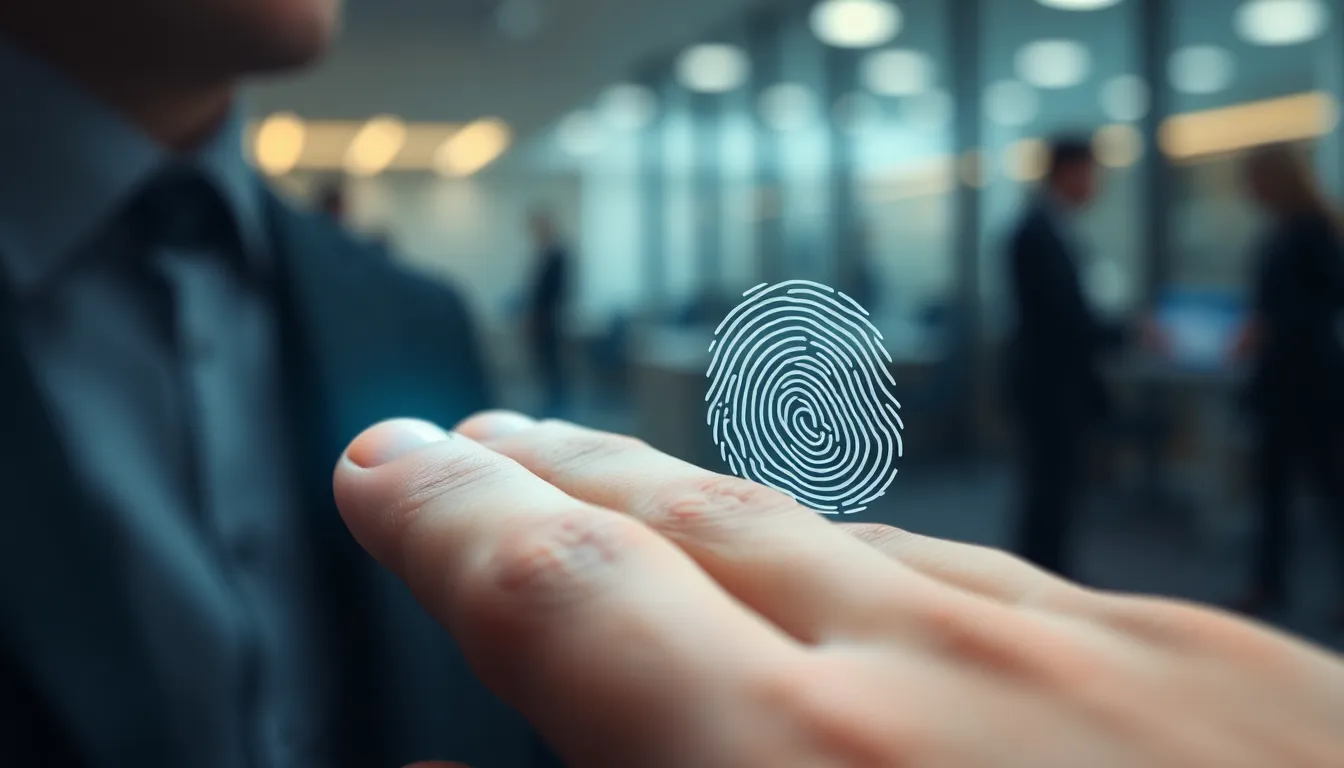
Biometrics technology encompasses several methods for identity verification using unique personal characteristics. Each type plays a significant role in enhancing security and improving user experience.
Fingerprint Recognition
Fingerprint recognition analyzes the unique patterns of ridges and valleys on an individual’s fingertips. It captures a digital image of the fingerprint, then converts it into a mathematical representation. This method guarantees high accuracy and is widely used in law enforcement, mobile devices, and secure access systems. Fingerprint scanners often show a false acceptance rate below 0.01%, making it one of the most reliable biometric technologies.
Facial Recognition
Facial recognition identifies individuals by analyzing facial features and comparing them to a stored database. It employs algorithms to measure facial landmarks, such as distances between eyes, nose shape, and jawline contours. Applications range from smartphone unlocking systems to airport security screenings. Current facial recognition systems maintain a high accuracy rate, with performance improvement rates approaching 95% in controlled environments.
Iris Recognition
Iris recognition leverages unique patterns in the colored part of the eye, providing a highly accurate method of identification. Scanners capture detailed images of the iris, and sophisticated algorithms analyze these images for individual identification. This technology is less prone to spoofing, offering superior security, especially in high-security environments like border control. Iris recognition provides a false acceptance rate of approximately 0.0001%, showcasing its effectiveness.
Voice Recognition
Voice recognition utilizes speech patterns and vocal characteristics for identity verification. It analyzes the unique traits of a person’s voice, such as pitch, tone, and cadence. Voice recognition technology finds applications in virtual assistants, customer service systems, and secure transactions. Recent advancements allow for accuracy rates exceeding 90% in noisy environments, making it a valuable tool for user authentication.
Applications of Biometrics Technology
Biometrics technology has numerous applications across various sectors, significantly enhancing security and user experience. Key applications include security and surveillance, mobile devices, and banking and financial services.
Security and Surveillance
Biometrics technology plays a crucial role in security and surveillance systems. Video surveillance systems integrate facial recognition to identify individuals in real-time, improving public safety. Access control systems utilize fingerprint and iris recognition for secure building entry, reducing unauthorized access. Law enforcement agencies employ biometrics for criminal identification and evidence collection, streamlining investigative processes. These applications enable organizations to monitor environments effectively and deter criminal activity through advanced identification methods.
Mobile Devices
Mobile devices increasingly incorporate biometrics for user authentication and security. Smartphones utilize fingerprint scanners and facial recognition technologies to unlock devices securely. Biometrics facilitate app access and online transactions, providing seamless user experiences while protecting sensitive information. Mobile payment systems leverage voice recognition and biometric authentication, ensuring secure transactions without the need for traditional passwords. These advancements foster convenience while enhancing the security paradigm of personal mobile technology.
Banking and Financial Services
Banking and financial services benefit significantly from biometrics technology. Institutions adopt fingerprint and facial recognition for customer authentication during transactions, reducing fraud risks. Mobile banking apps utilize biometrics to secure user accounts and transactions, increasing customer trust and satisfaction. ATMs integrate iris and fingerprint recognition systems for access, further enhancing security protocols. By implementing biometrics, banks streamline operations and improve overall security, addressing the persistent challenge of identity theft in the digital financial landscape.
Advantages of Biometrics Technology
Biometrics technology offers several key advantages that enhance security and user experience across various applications.
- Enhanced Security: Biometrics significantly reduces the risk of unauthorized access. Unique biological traits such as fingerprints and iris patterns provide a strong defense against identity fraud.
- Increased Accuracy: Biometrics achieves high accuracy rates in user authentication. For instance, fingerprint recognition boasts a false acceptance rate below 0.01%, while iris recognition has a remarkable rate of approximately 0.0001%.
- Improved User Convenience: Biometrics streamlines authentication processes. Users can authenticate quickly without remembering complex passwords, leading to a smoother experience during transactions and logins.
- Scalability: Biometrics can be integrated into various systems, making it suitable for both small businesses and large organizations. This adaptability expands its reach in sectors like banking, healthcare, and security.
- Cost-Effectiveness: Long-term savings arise from reduced fraud and theft. Organizations implementing biometrics can decrease expenses related to security breaches and improve operational efficiency.
- Tamper Resistance: Unlike physical tokens or passwords, biological traits are difficult to replicate or steal. This feature offers an additional layer of security for sensitive data.
- Real-Time Authentication: Biometrics supports instant verification, enabling secure access within seconds. This immediacy enhances safety in critical environments, such as airports and banks.
- User Accountability: Biometrics promotes accountability by accurately identifying individuals. It becomes easier to track actions and access history, improving compliance and security protocols.
These advantages illustrate how biometrics technology evolves security measures and improves user interactions in an increasingly digital landscape.
Challenges and Limitations
Despite its advantages, biometrics technology faces several challenges and limitations that impact its effectiveness.
- Privacy Concerns: Users frequently express apprehension regarding the collection and storage of their biometric data. Data breaches can lead to the exposure of sensitive information, raising serious privacy issues.
- Technical Limitations: Environmental factors can hinder biometric system performance. For instance, facial recognition systems may struggle in low-light conditions, while fingerprint readers may fail with dirty or wet fingers.
- False Acceptance and Rejection Rates: Even advanced biometric systems experience false acceptance or rejection rates. While fingerprint recognition boasts a false acceptance rate below 0.01%, discrepancies in user presentation can still result in misidentifications.
- User Acceptance: Many individuals may resist using biometrics due to cultural or personal beliefs. Trust in new technologies plays a crucial role in widespread adoption.
- Cost: Implementation can be costly for organizations, especially when integrating biometric systems with existing infrastructures. Dependability on advanced technology often necessitates significant investment.
- Regulatory Compliance: Organizations must comply with various regulations related to biometric data, which may vary by region. Navigating these legal requirements can pose challenges in deployment strategies.
- Integration with Legacy Systems: Transitioning to biometric systems from traditional authentication practices can be complex. Existing processes may require extensive modification or replacement.
- Limited Accessibility: Some biometric systems may not accommodate all users, such as those with disabilities affecting their ability to use certain biometric traits.
These challenges highlight the need for continuous advancements in biometrics technology and strategic solutions to address limitations effectively.
Future Trends in Biometrics Technology
Biometrics technology is set to evolve significantly in the coming years, driven by advancements in artificial intelligence and machine learning. Increased accuracy and reliability in biometric systems will result from these technologies, enabling real-time data analysis and improved user experiences.
Emerging trends include:
- Multi-modal Biometrics: Multi-modal systems integrate multiple biometric identifiers, such as fingerprints and facial recognition, enhancing security and reducing false acceptance rates.
- Wearable Biometric Devices: Wearable technology will enable continuous biometric monitoring, providing seamless authentication through devices like smartwatches and fitness trackers.
- Biometric Payment Systems: Contactless payments using biometrics will gain traction, allowing secure transactions without physical cards or cash through fingerprint or facial recognition.
- Decentralized Data Storage: Blockchain technology will find applications in biometric data storage, improving security and privacy by reducing the risk of centralized data breaches.
- AI-Enhanced Facial Recognition: AI will enhance facial recognition technology by improving accuracy under diverse lighting conditions and angles, ensuring more reliable identification.
- Government and Law Enforcement Adoption: Increasing adoption by governments and law enforcement agencies will streamline identification processes and improve public safety initiatives.
- Privacy-Enhancing Technologies: Innovations focused on privacy will address users’ concerns, allowing individuals more control over their biometric data through encryption and anonymization.
These trends suggest a future where biometrics technology plays a vital role in security and identity verification while addressing privacy and accessibility concerns.
Biometrics technology is reshaping the landscape of identity verification and security. By leveraging unique biological traits, it offers a more reliable and user-friendly alternative to traditional authentication methods. As organizations increasingly adopt these systems across various sectors, the benefits become evident.
The future of biometrics promises to be even more innovative with advancements in AI and machine learning. Emerging trends such as multi-modal biometrics and decentralized data storage aim to enhance security while addressing privacy concerns. As technology evolves, it’s clear that biometrics will play a crucial role in safeguarding sensitive information and streamlining user interactions in an increasingly digital world.


