

Interactive Augmented Reality (AR) is revolutionizing the way people engage with digital content. By blending the virtual and physical worlds, it creates immersive experiences that captivate users like never before. From gaming and education to retail and real estate, the applications of interactive AR are vast and growing rapidly.
As technology advances, the potential for interactive AR expands, allowing for more sophisticated interactions and richer storytelling. Users can now visualize products in their own spaces, learn complex concepts through engaging simulations, and explore environments that would otherwise be out of reach. This shift not only enhances user engagement but also transforms how businesses connect with their audiences, making interactive AR a game-changer in the digital landscape.
Overview of Interactive AR
Interactive Augmented Reality (AR) amalgamates the virtual and real worlds, providing immersive experiences for users. This technology enhances how individuals engage with digital content in various sectors, including gaming, education, retail, and real estate.
Key Features of Interactive AR
- User Engagement: Interactive AR captivates users by allowing them to interact with virtual objects in real-time. This interactivity fosters deeper connections with the content.
- Visualization: Interactive AR enables users to visualize products in their actual environment before making purchases, boosting confidence in buying decisions.
- Educational Simulations: In educational contexts, interactive AR facilitates learning through simulations, offering dynamic visualizations of complex concepts.
- Environmental Exploration: Users can explore new environments, providing virtual tours and experiences that enhance understanding and appreciation of different locations.
Applications of Interactive AR
- Gaming: In the gaming industry, interactive AR creates layered experiences that merge physical space with digital play, transforming how users interact with games.
- Retail: Retailers utilize interactive AR for virtual try-ons, allowing customers to see how products will look or function in their own space.
- Real Estate: Real estate agents employ interactive AR to give potential buyers immersive property walkthroughs without being physically present.
- Training: Industries like healthcare and aviation harness interactive AR for training purposes, simulating real-life scenarios in a controlled environment.
Interactive AR continually evolves, enhancing user interaction and engagement across multiple fields. Its integration offers innovative solutions that redefine business-consumer dynamics.
Key Features of Interactive AR
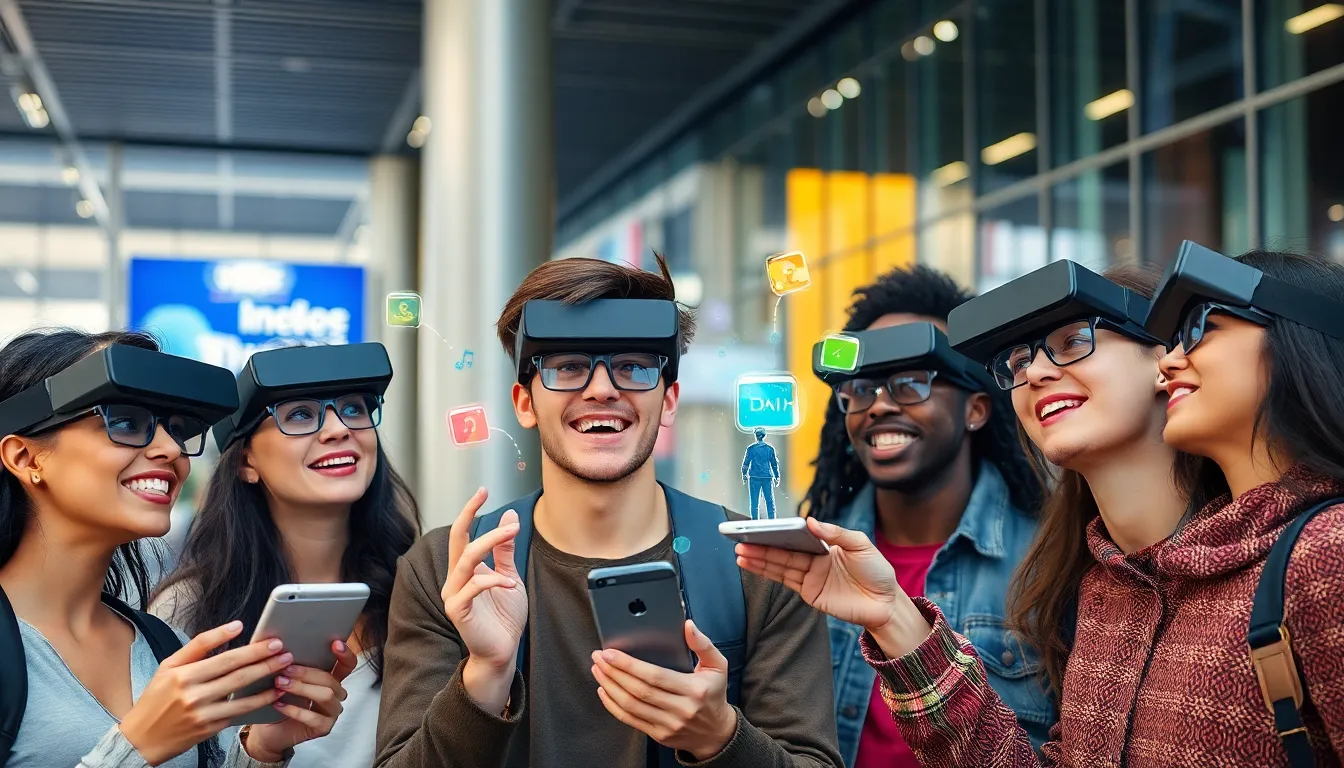
Interactive AR transforms user interaction by blending digital content with real-world environments. This evolution enhances experiences across industries, increasing both engagement and productivity.
User Engagement
User engagement remains a cornerstone of interactive AR. Users actively participate in experiences rather than being passive observers. This interactivity fosters deeper emotional connections, making the AR experience memorable. Features like gesture recognition, voice commands, and responsive feedback enable seamless interactions. Studies show that interactive content can lead to a 40% increase in user retention compared to traditional media.
Real-World Applications
Real-world applications of interactive AR span diverse sectors. In gaming, AR enriches gameplay by overlaying digital assets onto the physical world, creating immersive narratives. Retail utilizes AR for virtual try-ons, enabling customers to visualize products in real-time, which can boost sales conversion rates by up to 30%. In education, AR facilitates complex concept simulations, allowing students to grasp difficult subjects through interactive experiences. Real estate professionals leverage AR for virtual property walkthroughs, enabling prospective buyers to explore listings without physical visits. Each application enhances user experience, demonstrating the versatility and impact of interactive AR across industries.
Benefits of Interactive AR
Interactive AR offers significant advantages that enhance user experiences across various sectors. These benefits include enriched learning experiences and improved customer interactions, making it a valuable tool in today’s digital landscape.
Enhanced Learning Experiences
Interactive AR transforms traditional learning methods by providing immersive educational content. Users engage with simulations, allowing them to visualize complex concepts and processes. Studies indicate that learners retain 70% of information when engaging with interactive content, compared to only 20% with passive viewing. Additionally, AR tools can introduce dynamic environments for experimentation, such as virtual laboratories for science students or interactive maps for history lessons. This method motivates learners, promoting a proactive approach to education.
Improved Customer Interaction
Interactive AR redefines customer engagement by inviting them to interact with products in a virtual space. Retailers utilize virtual try-ons, enhancing shopping experiences by allowing customers to visualize clothing or accessories before purchasing. This capability can lead to increased conversion rates—up to 30% in some cases. Manufacturers and service providers also benefit from showcasing products in real-world settings, enhancing customer confidence in their decisions. Enhanced interaction fosters deeper emotional connections, turning customers into brand advocates.
Challenges in Implementing Interactive AR
Implementing Interactive Augmented Reality (AR) involves navigating several challenges that can hinder its effectiveness and adoption. Key obstacles include technical limitations and user accessibility.
Technical Limitations
Technical limitations remain a significant hurdle in the deployment of interactive AR. Device compatibility issues arise as AR applications may require the latest hardware to function optimally. This can lead to inconsistent user experiences across different devices. Additionally, the need for high-speed internet connectivity can restrict access in areas with inadequate network infrastructure. Processing power also plays a critical role; complex AR applications may strain devices, causing latency or crashes. These factors can result in an unsatisfactory user experience, discouraging engagement.
User Accessibility
User accessibility presents another challenge for interactive AR implementation. Diverse demographic factors, such as age and socio-economic status, influence technology adoption. Older adults may find it difficult to navigate AR interfaces, while individuals with disabilities may encounter barriers without adequate adaptation features. Moreover, the perception of AR technology as a niche or gimmicky can limit its acceptance among broader audiences. Ensuring that AR experiences are inclusive requires thoughtful design and consideration of various user needs, ultimately determining the technology’s reach and effectiveness.
Future Trends in Interactive AR
Future trends in interactive AR indicate significant advancements and broader applications across sectors. Emerging technologies in AR are expected to enhance user engagement, leading to more immersive experiences.
- AI Integration: Artificial intelligence will play a pivotal role in personalizing interactive AR experiences. AI algorithms can analyze user behavior and preferences, creating tailored content that resonates with individual users.
- Enhanced Mobile Capabilities: As mobile devices advance, the quality of AR experiences will improve. New smartphones will support higher processing power and better graphics, making AR applications smoother and more visually appealing.
- Wearable AR Devices: Wearable technology, such as smart glasses, will transform AR interactions. These devices will enable hands-free experiences, allowing users to engage with digital content while maintaining focus on their physical environment.
- Social AR Experiences: Social media platforms are likely to integrate more AR features, fostering shared interactive experiences. Users can connect with friends in virtual environments, enhancing social interactions and entertainment.
- Industry-Specific Solutions: Different sectors will adopt specialized interactive AR applications. In healthcare, AR may provide surgeons with real-time data overlays during procedures, while in manufacturing, it will assist in assembly and maintenance processes.
- Gamification of Learning: AR will further revolutionize education through gamified learning experiences. Educational institutions can use AR to create interactive lessons that enhance student engagement and information retention.
- Improved Accessibility: Developers will focus on inclusive designs that cater to diverse user demographics. Customizable interfaces will address the needs of individuals with varying abilities, making interactive AR more accessible.
- Sustainability Practices: New interactive AR solutions will emphasize eco-friendly practices. Virtual environments can minimize physical resource consumption, supporting sustainability goals across industries.
Innovations in interactive AR are expected to redefine user experiences and interactions in the digital landscape, enhancing daily activities and business operations.
Interactive Augmented Reality is reshaping the way users engage with digital content. Its ability to blend the virtual and physical worlds creates immersive experiences that resonate deeply with users. As technology continues to evolve, the potential for interactive AR expands across various industries, driving innovation and enhancing user connections.
While challenges remain in terms of accessibility and technical limitations, the future looks promising. With advancements in artificial intelligence and mobile capabilities, interactive AR is set to become more personalized and user-friendly. As businesses adopt these technologies, they’ll not only improve customer engagement but also foster lasting relationships with their audiences. The journey of interactive AR is just beginning, and its impact will likely redefine user experiences in the digital landscape.


