

In a world where smartphones can outsmart some of us, education is stepping up its game with emerging technologies that are transforming classrooms into futuristic learning hubs. Imagine students donning VR headsets to explore ancient civilizations or using AI tutors that never run out of patience. It’s not just a sci-fi dream; it’s happening right now, and it’s making learning more engaging and accessible than ever.
Overview of Emerging Technologies in Education
Innovative technologies are reshaping educational landscapes and enhancing learning experiences. Virtual reality (VR) immerses students in interactive environments, enabling exploration of historical civilizations and scientific concepts. Schools are increasingly implementing VR headsets to foster engagement among learners.
Artificial intelligence (AI) supports personalized learning. AI tutors adapt to individual student needs, offering resources and feedback tailored to their unique preferences. This approach helps ensure every learner receives the guidance necessary to succeed. AI-powered platforms analyze student performance data, allowing educators to identify areas for improvement.
Augmented reality (AR) adds an additional layer of interaction in classrooms. By overlaying digital information onto the real world, AR facilitates experiential learning and boosts student participation. For example, using AR applications, students can visualize complex structures or biological processes in real-time.
Learning management systems (LMS) streamline course delivery and management. These systems centralize resources, assignments, and assessments, providing an organized space for educators and students. Features like analytics and communication tools enhance collaboration and track student progress effectively.
Gamification also plays a significant role in modern education. It integrates game design elements into learning activities, increasing motivation and engagement. This approach encourages healthy competition and enables students to earn rewards that reinforce their achievements.
Collaborative technologies enable group work beyond physical boundaries. Video conferencing tools, shared digital whiteboards, and project management software create opportunities for students to collaborate on projects. As a result, students build essential communication and teamwork skills for future careers.
These emerging technologies not only modernize teaching methods but also prepare students for a tech-driven world. The integration of these tools continues to evolve, offering exciting possibilities for the future.
Benefits of Emerging Technologies
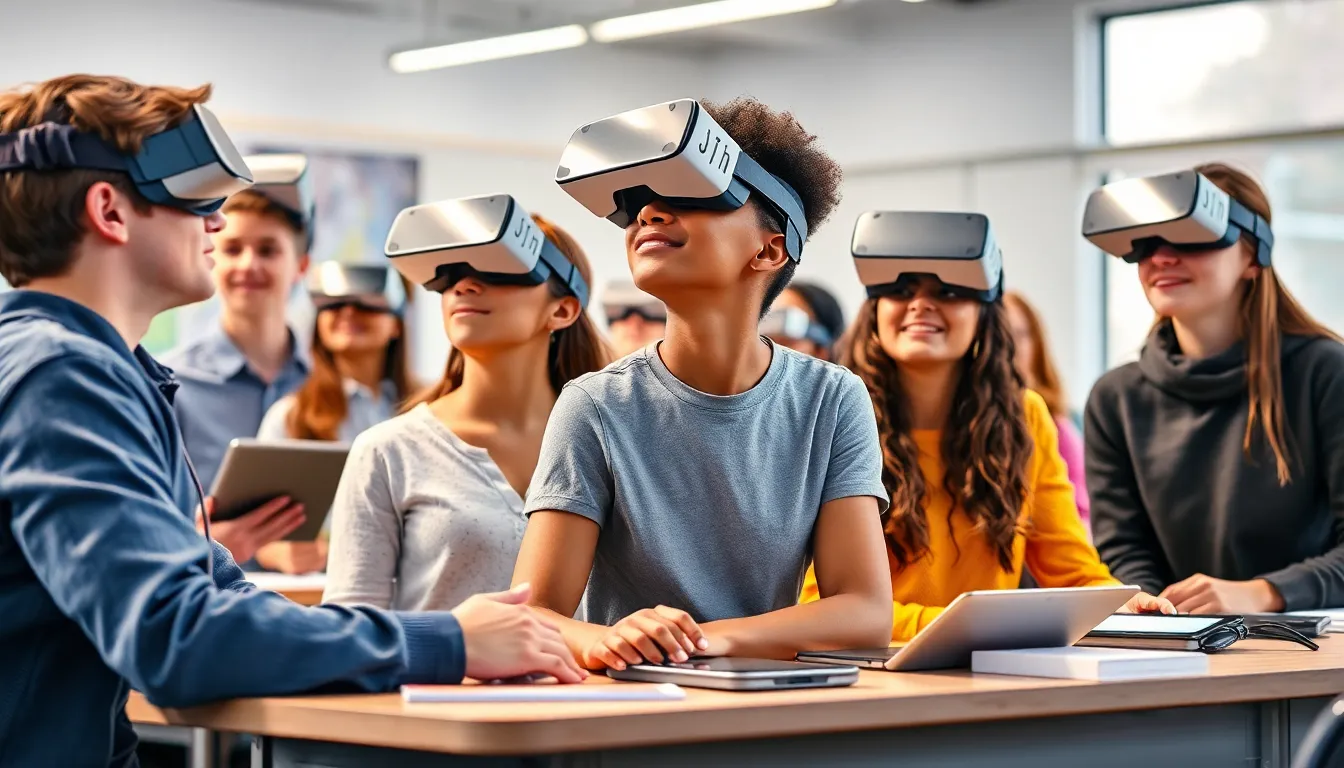
Emerging technologies offer significant advantages in education by enhancing learning experiences and improving accessibility.
Enhanced Learning Experience
Innovative tools like virtual reality and augmented reality create immersive classrooms. Students engage with content actively rather than passively absorbing information. Interactive simulations transform traditional subjects into hands-on experiences. For example, history lessons become lifelike journeys through time, allowing students to explore ancient civilizations. Moreover, artificial intelligence provides personalized learning pathways, adapting to each student’s pace and style. Educational games incorporate challenge and excitement, motivating learners to achieve their goals. These technologies not only foster collaboration among peers but also facilitate feedback from educators, enhancing the overall learning journey.
Improved Accessibility
Emerging technologies break barriers for diverse learners. Online platforms enable students from various backgrounds to access quality educational resources, regardless of location. Learning management systems centralize materials, ensuring easy access for everyone. Adaptive technologies cater to students’ individual needs, such as text-to-speech tools for the visually impaired. Additionally, video content provides alternative learning formats, accommodating different preferences. Remote learning opportunities remove geographical constraints, fostering inclusivity in education. Tech-driven initiatives ensure that each student has the tools required to succeed, leveling the playing field in modern classrooms.
Types of Emerging Technologies
Innovations in education continue to expand, incorporating various technologies that enhance learning experiences. The following technologies play a crucial role in reshaping educational environments.
Artificial Intelligence
AI transforms the educational landscape by offering personalized learning experiences. Intelligent tutoring systems provide students with tailored feedback and support, allowing them to progress at their own pace. These systems analyze student performance to identify areas needing improvement. Adaptive learning platforms adjust content based on individual abilities, enhancing engagement. Educators benefit from AI-powered analytics that help track student progress and predict outcomes.
Virtual and Augmented Reality
VR and AR create immersive educational experiences that deepen understanding of complex subjects. Students can explore historical sites through VR, enabling them to visualize events firsthand. Meanwhile, AR overlays digital information in real-time, enriching learning through interactive elements. These technologies encourage experiential learning by simulating real-world scenarios. As tools for collaboration, they promote teamwork and problem-solving skills within a digital context.
Learning Management Systems
LMS streamline course delivery and management for both educators and students. Centralized platforms facilitate content organization, assignment tracking, and communication. Users can access multimedia resources and participate in discussions anytime, anywhere. Analytics embedded in LMS provide insights into learner behavior, helping instructors identify engagement trends. Such functionalities enhance course design and improve educational outcomes.
Blockchain in Education
Blockchain technology offers innovative solutions for credential verification and record-keeping. It ensures secure, transparent storage of educational credentials, reducing the risk of fraud. Decentralized platforms enable efficient sharing of academic records among institutions. Learners can control access to their credentials, simplifying the application process for jobs or further education. By enhancing trust and accountability, blockchain promotes integrity in educational systems.
Challenges in Implementing Emerging Technologies
Emerging technologies in education face several obstacles that hinder their full potential.
Cost and Funding Issues
Funding challenges significantly impact the adoption of new technologies. Schools often lack the budget for high-quality devices and software. Government grants and partnerships with tech companies could provide financial relief, but these options are not universally available. Budget constraints also limit ongoing professional development needed for effective technology integration. Without proper investment in infrastructure, such as reliable internet access, schools struggle to implement innovative solutions. Consequently, resource allocation remains a major hurdle in leveraging emerging technologies in the classroom.
Resistance to Change
Resistance from educators and administrators poses a significant barrier to adopting emerging technologies. Many individuals prefer traditional teaching methods, seeing them as tried and true. Concerns about the effectiveness of new tools can result in skepticism. Change often demands a shift in mindset and additional training, which can overwhelm staff already dealing with heavy workloads. Engaging educators in the decision-making process can foster a positive attitude towards innovation. Ultimately, overcoming resistance requires effective communication and demonstration of the benefits new technologies bring to the educational landscape.
Future Trends in Education Technology
Artificial intelligence continues to reshape personalized learning, providing adaptable content that meets students’ unique needs. Intelligent tutoring systems analyze student performance, adjusting lessons to optimize comprehension. Virtual reality and augmented reality stand out for their immersive experiences, allowing learners to interact directly with educational content in ways that traditional methods cannot. Enhanced visualization techniques engage students, fostering deeper understanding of complex subjects.
Learning management systems streamline course administration and deliver content efficiently. These tools track student progress while providing an organized framework for educators. Blockchain technology emerges as a promising solution for secure credential verification, enhancing trust in academic records.
Gamification increasingly motivates students by integrating game-like elements into learning. Incorporating rewards and challenges sparks engagement, making educational experiences more enjoyable. Moreover, collaborative technologies facilitate teamwork beyond physical walls, allowing students to work together remotely on projects, which builds essential communication skills.
Accessibility gains importance as schools implement tools that cater to diverse learning preferences. Online platforms create opportunities for students who may face geographic or physical barriers. Remote learning options ensure that all students have access to quality resources, leveling the educational playing field.
Educational institutions must address challenges associated with technology adoption. Budget constraints remain a significant issue, limiting access to vital resources. Resistance from educators can hinder progress, as some may prefer established teaching methods instead of embracing innovation. Engaging teachers in the decision-making process about technology implementation fosters a more inclusive approach, facilitating successful integration and enhancing the learning experience.
Emerging technologies are undeniably reshaping the educational landscape. As schools adopt tools like AI VR and AR they’re not just enhancing learning experiences but also preparing students for a rapidly evolving world. The integration of these technologies fosters engagement accessibility and personalized learning pathways that cater to diverse needs.
Despite the challenges of funding and resistance to change educators must embrace these innovations to unlock their full potential. By collaborating and engaging in the decision-making process schools can create a more dynamic and inclusive environment. The future of education is bright as these technologies continue to evolve and redefine how knowledge is imparted and acquired.


