

Virtual reality (VR) is transforming the way people experience digital content, offering immersive environments that engage users like never before. From gaming to education and healthcare, VR applications are reshaping industries by providing innovative solutions and enhancing user interaction.
As technology advances, the potential for VR continues to expand, making it a vital tool for businesses and individuals alike. Whether it’s training simulations for professionals or virtual tours for real estate, the versatility of VR is undeniable. This article explores the diverse applications of virtual reality and how they’re revolutionizing various fields, paving the way for a more interactive future.
Overview of Virtual Reality Applications
Virtual reality (VR) applications span various sectors, enhancing user experiences through immersive technology. They create simulated environments that engage users, offering practical solutions in multiple fields.
Gaming
Gaming remains one of the most popular applications of VR. Developers create interactive experiences that immerse players in digital worlds. Current titles, like “Beat Saber” and “Half-Life: Alyx,” showcase the technology’s potential for entertainment, providing engaging gameplay and innovative storytelling.
Education
Education benefits significantly from VR applications. Institutions utilize VR for virtual classrooms and immersive learning experiences. For instance, programs like Google Expeditions allow students to explore historical sites and scientific concepts interactively, promoting deeper understanding and retention.
Healthcare
Healthcare utilizes VR for training and therapeutic purposes. Medical professionals engage in simulations to practice surgical techniques, enhancing skill development. Additionally, VR aids in pain management and rehabilitation, offering patients immersive environments for relaxation and recovery.
Real Estate
Real estate agents leverage VR for virtual tours, allowing potential buyers to explore properties remotely. This technology saves time and broadens market reach, enabling clients to experience homes from anywhere in the world.
Tourism
Tourism incorporates VR to enhance travel experiences. Virtual tours enable users to explore landmarks and attractions without leaving home. Platforms like YouVisit offer immersive experiences that inspire future travel decisions, making destinations accessible even before booking a trip.
Military and Defense
The military employs VR for training exercises, allowing soldiers to engage in realistic combat scenarios. These simulations prepare personnel for real-life situations while minimizing risk. Additionally, VR supports strategic planning by visualizing battlefield environments.
Retail
Retailers use VR to create interactive shopping experiences. Customers can explore virtual stores and customize products before purchase. Brands like IKEA provide apps that allow users to visualize furniture in their own spaces, improving customer satisfaction.
Sports
Sports organizations apply VR for training and fan engagement. Athletes can utilize simulations for skill development and strategy practice. Teams also engage fans with VR experiences, such as virtual seat previews during events.
Conclusion of Overview
Virtual reality applications continue to evolve, impacting various fields by enhancing engagement and interactivity. The ongoing development of VR technology promises further innovations, reshaping how users interact with digital content across numerous industries.
Types of Virtual Reality Applications
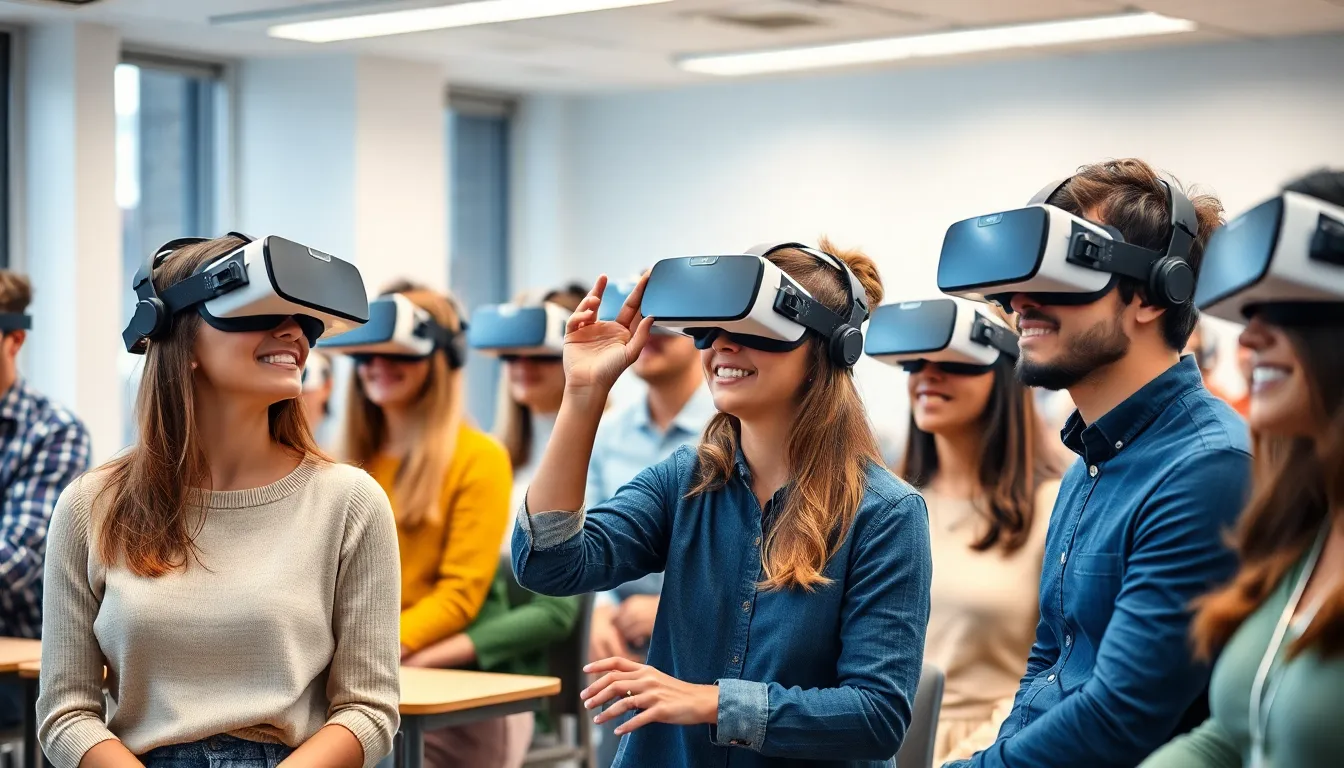
Virtual reality applications span various sectors, each leveraging VR’s unique capabilities for enhanced experiences. These applications include gaming, education, healthcare, and real estate, among others.
Gaming and Entertainment
Gaming remains one of the most prominent applications for VR technology. Interactive titles such as “Beat Saber” and “Half-Life: Alyx” exemplify how VR delivers engaging and immersive gaming experiences. Users experience unprecedented levels of interactivity, with environments that respond directly to their movements. Additionally, VR entertainment platforms allow users to enjoy concerts and movies in virtual settings, enhancing social interactions and providing access to unique experiences.
Education and Training
Education benefits significantly from VR applications. Programs like Google Expeditions enable students to explore historical sites or outer space through immersive field trips. Virtual classrooms create interactive learning environments, promoting deeper understanding and involvement. Moreover, VR training simulations prepare professionals across various fields, including medicine, aviation, and engineering, by replicating real-world scenarios, which enhances skill acquisition and confidence.
Healthcare and Therapy
Healthcare applications of VR focus on both training and patient care. Medical professionals use VR simulations for surgical training, allowing them to practice procedures in a risk-free environment. VR also helps patients manage pain through immersive experiences during treatments. Therapeutic applications include exposure therapy for phobias and PTSD, where controlled virtual environments assist in gradually confronting fears, leading to improved mental health outcomes.
Real Estate and Architecture
In real estate, VR provides virtual tours of properties, allowing potential buyers to explore homes from remote locations. This technology enhances the decision-making process by offering detailed visualizations of spaces. Architects use VR to create interactive designs, enabling clients to experience and modify plans before construction. This application streamlines project management and fosters better communication between stakeholders, ensuring all needs are met efficiently.
Benefits of Virtual Reality Applications
Virtual reality (VR) applications offer numerous advantages across various sectors, enhancing user engagement and promoting effectiveness. The following subsections detail specific benefits of VR technology.
Enhanced Learning Experiences
Enhanced learning experiences represent a key benefit of VR applications. Users immerse themselves in interactive environments, leading to improved comprehension and retention. For instance, students studying history can virtually visit ancient ruins, gaining insights beyond traditional textbooks. In the medical field, trainees practice surgical procedures in realistic simulations, allowing for hands-on experience without risk to patients. Research indicates that VR can increase learning retention rates by up to 75% compared to conventional methods.
Improved Patient Outcomes
Improved patient outcomes highlight another significant advantage of VR technology. In healthcare, VR applications assist in pain management, rehabilitation, and exposure therapy for conditions such as phobias and PTSD. Patients using VR for pain relief during procedures report a 50% reduction in discomfort levels. Additionally, VR enables guided rehabilitation exercises, promoting patient engagement and adherence to treatment plans. These applications facilitate a more effective healing process by making therapy more enjoyable and less intimidating.
Innovative Marketing Strategies
Innovative marketing strategies emerge as an essential benefit of VR applications. Businesses leverage VR to create immersive product experiences, allowing potential customers to interact with items before purchase. Retailers may offer virtual showrooms where consumers visualize furniture in their homes. According to recent studies, brands utilizing VR in marketing campaigns see engagement rates rise by 70%. This interactive approach not only increases customer satisfaction but also enhances brand loyalty and conversion rates.
Challenges in Virtual Reality Applications
Virtual reality (VR) applications face several challenges that impact their widespread adoption and effectiveness. These challenges include technical limitations and issues related to cost and accessibility.
Technical Limitations
Technical limitations pose significant obstacles for VR applications. Hardware specifications, such as processing power, graphic capabilities, and motion tracking accuracy, can hinder performance. Device compatibility varies, complicating user experience across different systems. Latency can create motion sickness, reducing user comfort during extended sessions. Resolution and field of view also affect immersion; for instance, low resolution can detract from visual clarity, thereby diminishing the overall experience. Current VR headsets, while improving, still suffer from limitations like weight and bulkiness, which impact prolonged usage.
Cost and Accessibility
Cost and accessibility remain major barriers to VR adoption. High-quality VR systems range from $300 to over $1,000, deterring adoption among individual users and small businesses. In addition, VR content production can incur substantial costs, discouraging developers from creating diverse applications. Accessibility challenges arise for individuals with disabilities, as not all VR experiences accommodate varying needs. Furthermore, inadequate internet infrastructure in certain regions limits access to online VR experiences, further restricting potential user bases. Enhanced affordability and improved accessibility standards would facilitate broader VR engagement across diverse demographics.
Future Trends in Virtual Reality Applications
Advancements in virtual reality (VR) technology shape its future across various sectors. Emerging trends include:
- Increased Accessibility: Developers focus on creating more affordable VR devices. This reduction in cost promotes wider adoption among users, facilitating access for more individuals and organizations.
- Enhanced Interactivity: Technologies incorporating haptic feedback and motion capture systems deliver more immersive experiences. Users can engage with environments intuitively, enhancing emotional responses during applications.
- Integration with AI: AI integration into VR experiences personalizes content delivery. Adaptive learning systems use AI to tailor educational experiences, improving engagement and comprehension in training environments.
- Expansion into Telehealth: VR continues expanding in telehealth, enabling remote consultations. Patients interact with healthcare professionals through virtual environments, enhancing convenience and care delivery.
- Focus on Mental Health: Therapists increasingly utilize VR for treating conditions such as anxiety and depression. Controlled environments provide exposure therapy options, demonstrating effectiveness in clinical treatments.
- Collaboration Tools: As remote work grows, VR collaboration tools become integral. Teams use virtual workspaces for meetings and brainstorming sessions, increasing productivity and creativity.
- VR in Social Media: Platforms integrate VR to create immersive social interactions. Users experience virtual gatherings, strengthening connections in an increasingly digital world.
- Educational Innovations: Future educational VR applications include gamification elements. These features boost student engagement and motivation, making learning enjoyable and effective.
- Real-World Simulation Training: Industries like aviation and military enhance training via VR simulations. Risk-free environments allow users to practice high-stakes scenarios, improving readiness for real-world applications.
These trends indicate a dynamic future for virtual reality applications as technology evolves, retaining relevance across multiple sectors.
Virtual reality is reshaping how individuals interact with digital content across various industries. Its ability to create immersive experiences not only enhances learning and training but also transforms entertainment and healthcare. As VR technology continues to advance, the potential applications will expand further, making it an integral part of everyday life.
Addressing current challenges like accessibility and affordability will be crucial in unlocking VR’s full potential. With innovations on the horizon, including AI integration and improved interactivity, the future of virtual reality looks promising. Embracing these advancements could lead to a more connected and engaging world for users everywhere.


